Updated August 27, 2026
I originally wrote this article in July 2025, before Bradford voters had decided whether to create a Government Study Commission to examine Home Rule.
A great deal has happened since then.
Bradford voters approved the creation of a seven-member Government Study Commission in November 2025. Since then, the Commission has studied Bradford’s existing government and has formally decided to move forward with developing a proposed Home Rule Charter. The Commission is now gathering public input and working toward putting a proposed charter before Bradford voters, currently expected in May 2027.
That changes the question considerably.
In 2025, Bradford residents were voting on whether Home Rule should be studied. In 2027, assuming the Commission completes and files a charter, voters would be deciding whether to adopt the specific form of government contained in that charter.
This article remains informational. My goal is not to tell anyone how they should vote, but to make sure Bradford residents understand what is actually being considered.
What Is Home Rule?
Bradford currently operates as a Third-Class City under Pennsylvania law and uses the commission form of government.
A Home Rule Charter is essentially a locally written constitution for municipal government. Pennsylvania law defines it as a document establishing the powers, structure, rights, duties and limitations of the municipal government, including how the governing body is composed and elected.
The basic difference is one of authority.
Under Home Rule, Pennsylvania law generally allows a municipality to exercise any local governmental power that is not prohibited by the Pennsylvania Constitution, state law or the municipality’s own charter.
That is broad authority—but it is not unlimited authority.
State law continues to control subjects such as elections, public schools, municipal boundaries, criminal law, certain employment and pension rights, taxation subjects, firearms regulation and a number of other statewide matters.
What Has Happened Since the 2025 Vote?
Here is where Bradford stands today:
- Bradford voters approved the seven-member Government Study Commission in November 2025.
- The Commission studied Bradford’s existing government and unanimously decided to proceed with developing a Home Rule Charter.
- The Commission has been working with professional assistance as it develops that proposed charter.
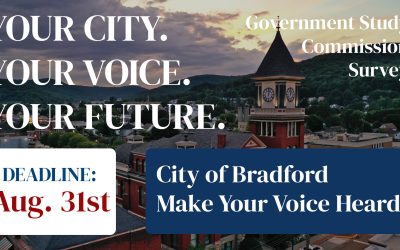
- A public questionnaire is currently open to City residents through August 31, 2026, and another public meeting is scheduled for October 15 at 6:00 p.m. at the Bradford Senior Center.
- The Commission has stated that it expects the proposed charter to go before Bradford voters in May 2027.
So we have passed the point where the question is simply, “Should Bradford investigate Home Rule?”
The Commission’s answer to that question has effectively been yes.
The remaining—and much more important—question is:
What will actually be in Bradford’s proposed charter?
What Would Bradford Residents Actually Vote On?
This distinction is extremely important.
If the Commission completes a Home Rule Charter, Bradford residents will not simply see a ballot question asking whether they like the idea of Home Rule.
Pennsylvania law provides for a question substantially asking whether the specific Home Rule Charter contained in the Government Study Commission’s report should be adopted.
That means residents should eventually be able to examine the actual document before voting.
Among other things, Pennsylvania law requires a proposed Home Rule Charter to specify the number of members serving on the municipal council, which offices will be elected, and whether council members will be elected at-large, by districts, or through some combination of the two.
Two Pennsylvania cities can both operate under Home Rule while having substantially different systems of government because each charter can establish different structures, checks and balances, elected offices and administrative responsibilities.
How Could Home Rule Affect City Administration?
One area a proposed Home Rule Charter may address is the relationship between City Council, the mayor, the City Administrator, and City departments.
Under Pennsylvania’s traditional commission form of city government, council members may be assigned responsibility for particular municipal departments. Bradford’s local Administrative Code also establishes the City Administrator as the City’s chief administrative officer, responsible for directing and supervising the administration of City departments and functions, subject to applicable ordinances and state law.
City Council continues to exercise responsibilities established by law and local ordinance, including certain roles involving appointments, removals, budgeting, legislation, and oversight.
A Home Rule Charter could retain elements of this structure or establish a different administrative arrangement. Depending on the final charter language, it could define responsibilities for City Council, the mayor, a City Administrator or manager, department heads, and other municipal officials.
Among the details residents may want to review in the eventual charter are:
-
Who is responsible for supervising City departments and employees?
-
Who appoints and removes department heads?
-
What administrative responsibilities are assigned to the mayor?
-
What responsibilities remain with City Council?
-
How does Council receive information about departmental operations?
-
What oversight and accountability provisions apply to the City’s chief administrative official?
The answers will depend on the specific language of the proposed charter. Until that document is completed, the final division of administrative responsibilities has not been determined.
What About Taxes?
This is another area where the Home Rule discussion can easily become misleading.
Home Rule does not automatically raise taxes.
It also does not automatically lower them.
What it does is potentially change the authority future City Councils have over certain tax rates.
Pennsylvania law says that a Home Rule municipality generally may levy taxes on subjects of taxation already authorized by state law and may establish its own rates of taxation upon residents. However, Home Rule does not allow a municipality simply to invent any new kind of tax it wants, and restrictions remain on taxes imposed on nonresidents.
For Bradford taxpayers, that means Home Rule could potentially give future councils more flexibility in deciding how the cost of City government is distributed.
A future council might rely more heavily on one authorized tax and less heavily on another. A charter could also impose additional local limitations on that authority.
None of that happens automatically simply because voters approve Home Rule.
That is why the financial provisions of the eventual charter deserve particular attention. Residents should be able to determine not simply whether Home Rule grants Bradford additional taxing flexibility, but what safeguards the proposed charter places around that flexibility.
A Correction to Bradford’s Home Rule History
There is also an important correction to the original version of this article.
Bradford did previously operate under a different governmental system, but describing that period simply as Bradford previously being a “Home Rule municipality” is misleading.
Bradford voters approved a Council-Manager plan under Pennsylvania’s Optional Third Class City Charter Law in 1962. Records indicate that the new system became effective in the 1960s, and a 1968 Pennsylvania Supreme Court decision involving Bradford confirmed that the City was operating under that optional charter system and possessed unusually broad local governmental powers under it.
In 1982, Bradford voters approved abandoning the council-manager system and returning to the commission form of government.
Bradford later elected another charter commission in 1988, and a proposed Home Rule Charter was actually placed before Bradford voters on May 15, 1990. It was rejected.
That is a more accurate history than the information contained in the original version of this article.
It is also useful history today because Bradford has, in fact, experimented with a government where professional management played a considerably larger role before ultimately returning to the commission system.
What Has Not Been Decided Yet?
This may be the most important section of this update.
The Government Study Commission has decided to develop a Home Rule Charter.
That does not mean every provision of that charter has been finalized.
Until the final document is completed, residents should be cautious about statements that Bradford “will” have a particular number of council members, eliminate a particular elected office, abolish wards, give a manager a particular power, change a tax rate or restructure a particular department.
Those things may be discussed or proposed.
They are not final until they are written into the proposed charter.
And even then, they do not take effect unless Bradford voters approve that charter.
Why the Current Public Input Matters
The Government Study Commission is currently asking Bradford residents to complete its questionnaire by August 31, 2026.
This is therefore one of the points in the process where residents can offer input before the final charter is completed, rather than waiting until the only choices available are “yes” or “no” on Election Day.
The Commission has also announced another public meeting for October 15, 2026, at 6:00 p.m. at the Bradford Senior Center.
Whether someone currently believes Home Rule sounds like a good idea, a bad idea, or simply isn’t sure yet, this is the appropriate time to ask questions about how the government should actually operate.
Where We Stand Today
In July 2025, I wrote that Bradford was not voting to adopt Home Rule—it was voting on whether to study it.
That was true then.
Today, the process has moved into its next stage.
The Government Study Commission has decided to develop a charter, public input is being collected, and the current target is a May 2027 referendum.
The most useful question now is no longer:
“Do I support Home Rule?”
It is:
“What exactly does Bradford’s proposed Home Rule Charter say, and what would it change about the government I have today?”
Once that document exists, residents should have the opportunity to examine those details carefully before making their decision.
Until then, I’ll continue sharing updates as the proposed structure becomes clearer.
Original Post - July 9th, 2025
You may have heard the term “Home Rule” starting to come up in conversation around Bradford, especially with an upcoming vote on the horizon. But what is Home Rule exactly—and what does it mean for our city?
This post is meant to clearly explain the concept and the process, without advocating one way or the other. My goal is to help residents better understand what we’d actually be voting on and what the next steps would look like if the measure moves forward.
What Is Home Rule?
Most municipalities in Pennsylvania—Bradford included—operate under the State’s Third-Class City Code, which sets standardized rules for how cities are governed. Home Rule is an alternative. It allows a city to create its own local charter, kind of like a municipal constitution.
Where the current system says, “you may only do what the state says you can,” a Home Rule charter flips that to say, “you may do anything not explicitly prohibited by state law.”
What Could Change (and What Couldn’t)?
Adopting Home Rule doesn’t mean unlimited power—it means a different structure. If a charter were eventually adopted, it could allow Bradford to:
| Could Possibly Change | Would Not Change |
|---|---|
| Local tax structure or caps | State and federal tax types (e.g., income tax) |
| How we write and manage our city budget | Public school governance |
| The form of city government | State-mandated programs and pensions |
| Term limits or transparency measures | Criminal law or constitutional rights |
Ultimately, what changes would depend on what a potential charter says—and voters would have the final say before anything is implemented.
Why Cities Consider It
Some cities pursue Home Rule to:
- Gain flexibility in solving local problems
- Create or streamline local taxes
- Restructure how city government functions
- Increase local transparency or accountability
Others explore it and decide to stay with the system they have.
What Are the Concerns?
Critics of Home Rule often cite:
- Complexity: It can take time and legal resources to draft a new charter.
- Uncertainty: Without knowing what would go in the charter, it can feel risky.
- Mistrust: Some people worry it opens the door to mismanagement.
Supporters argue it gives voters more control and allows communities to be more self-reliant.
What Bradford Is Actually Voting On
This November (2025), residents of Bradford will vote on two things:
- Whether or not to form a Government Study Commission
- Which individuals should serve on that commission if it’s approved
Those running for the commission have already petitioned to appear on the ballot. Voting for a commissioner doesn’t mean you’re for or against Home Rule—it just ensures we have people in place if the study moves forward.
Worth noting:
Bradford has considered Home Rule before—twice, in 1974 and again in 2007. In both cases, the community ultimately decided not to adopt a Home Rule charter after going through the exploratory process. Furthermore we are considered a former home-rule municipality but it is unclear online what years we were under home-rule. If anyone knows the exact dates that we were under home-rule and why it was repealed I’d love to here from you: Contact Me
This history is part of what makes the current conversation important. Whether we land in the same place or somewhere new, it’s helpful to learn from past efforts while looking ahead with fresh eyes.
What Happens If the Commission Is Formed?
If the measure passes:
- The elected commissioners will spend 12–18 months studying how Bradford currently operates and whether a Home Rule charter could offer improvements.
- After their research, they may decide to draft a proposed charter, or they may recommend keeping things the same.
- A public town hall will be held to explain their findings and answer questions.
- Finally, in 2026, voters would have a chance to vote on whether to adopt the new charter—or not.
Final Thoughts
This upcoming vote is not about switching to Home Rule—it’s about deciding whether to explore the idea. As a candidate for City Council, I’m not here to push one way or the other. I simply believe that Bradford residents deserve clarity, transparency, and accurate information about what this process would involve.
If you’d like to learn more, talk it over, or share your thoughts, please don’t hesitate to reach out:
🔗 Contact me here
Disclosure: I serve as a member of Bradford City Council. This website is independently maintained and does not represent the official position of the City of Bradford, City Council, or the Government Study Commission. Any opinions expressed here are my own. Information regarding the Government Study Commission is drawn from public records, public meetings, and publicly available sources.